
If you’ve looked into USB microphones at any point in the last decade, you’ve probably run into the Blue Yeti. For a long time, it was the default recommendation. Streamers used it. Podcasters used it. YouTubers used it. It was everywhere.
But the USB mic market has changed a lot. There are more options, better software, and microphones aimed at very specific use cases now. So the obvious question is whether the Blue Yeti still deserves its reputation, or if it’s just living off old hype.
I’ve used the Blue Yeti myself and tested plenty of other USB mics over the years. Here’s how it really stacks up today.
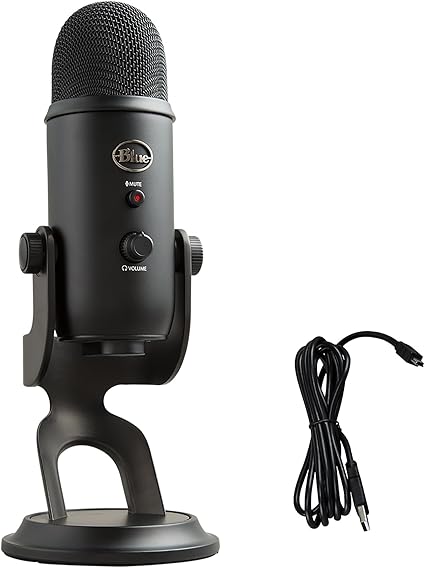
A plug-and-play USB microphone with clear, studio-style sound, multiple pickup patterns, and built-in controls, making it a reliable choice for gaming, streaming, podcasting, and everyday computer use.
The USB Microphone Landscape Has Changed
When the Blue Yeti first took off, most USB microphones were pretty basic. You either sounded thin, noisy, or both. The Yeti stood out because it sounded full, had physical controls, and didn’t require an audio interface.
Fast forward to now, and USB mics are everywhere. You can find models designed specifically for gaming, podcasting, Zoom calls, or music recording. Many of them cost less, take up less desk space, and are easier to use.
That doesn’t automatically make the Yeti obsolete, but it does mean it’s no longer the obvious choice for everyone.
What the Logitech Blue Yeti Still Does Well
The biggest strength of the Logitech Blue Yeti is flexibility. It’s one of the few USB microphones that offers multiple pickup patterns.
You get cardioid for solo recording, bidirectional for interviews, omnidirectional for group recordings, and stereo for music or ambient sound. Most USB mics stick to cardioid only.
Sound quality is still solid. The Yeti captures a warm, detailed voice that works well for podcasts, voiceovers, and YouTube narration. It doesn’t sound thin or tinny, and it holds up surprisingly well against newer mics if your room is reasonably quiet.
The onboard controls are another plus. The gain knob, mute button, and headphone volume control are right on the mic. You don’t have to dig through software just to make small adjustments.
In short, it still does the basics very well.
Where the Blue Yeti Starts to Feel Dated
The same features that once made the Yeti stand out now create some drawbacks.
First, it’s big. The Blue Yeti takes up a lot of desk space, especially on its stock stand. Compared to sleeker USB mics made for boom arms or compact setups, it can feel bulky.
Second, it’s sensitive. This is great in a treated room, but in a normal home office, it can pick up keyboard noise, desk vibrations, and room echo more easily than some newer dynamic-style USB mics. I’ve seen a lot of people struggle with background noise simply because they didn’t realize how sensitive it is.
Third, the included software experience isn’t as polished as what some competitors now offer. Brands like HyperX and Elgato have put a lot of effort into making their software beginner-friendly, especially for streamers.
None of these are dealbreakers, but they’re worth knowing upfront.
Blue Yeti vs Popular USB Mic Alternatives
This is where the conversation gets more interesting. The Blue Yeti isn’t competing against budget throwaways anymore. It’s competing against purpose-built USB microphones.
The HyperX QuadCast is a good example. It’s clearly designed for gamers and streamers. It has built-in shock mounting, a tap-to-mute sensor, and RGB lighting. It’s easier to set up cleanly, and it tends to reject desk noise better. What you lose is the multiple pickup patterns.
The Rode NT-USB focuses on sound quality and simplicity. It sounds excellent for vocals, but again, you’re locked into cardioid mode. It’s more of a “plug it in and record” mic with fewer physical controls.
Then there’s the Samson Q2U, which is dynamic rather than condenser. It’s far more forgiving in noisy rooms and can be used via USB or XLR. It doesn’t sound as rich as the Yeti out of the box, but it’s much easier to manage in real-world environments.
The pattern here is clear. Newer USB mics often do one thing really well. The Blue Yeti tries to do everything.
Who the Blue Yeti Still Makes Sense For
Despite the competition, the Blue Yeti is not a bad buy. It just isn’t a universal recommendation anymore.
It still makes sense if you want one microphone that can handle multiple recording scenarios without upgrading gear. If you do interviews, solo narration, and occasional group recordings, the pickup pattern options are genuinely useful.
It’s also a good choice if you value physical controls and don’t want to rely heavily on software. Everything you need is right on the mic.
Finally, if you already have a relatively quiet room or plan to use a boom arm and proper mic technique, the Yeti’s sensitivity becomes an advantage rather than a problem.
When You’re Better Off Choosing Something Else
If you mainly stream or game in a noisy room, a dynamic USB mic or a gaming-focused condenser will likely give you fewer headaches.
If desk space matters, the Yeti can feel oversized compared to slimmer alternatives.
And if you only ever plan to record solo voice, the extra pickup patterns are something you’ll pay for but rarely use.
This is where many people get tripped up. They buy the Blue Yeti because it’s famous, not because it matches their actual use case.
Is the Blue Yeti Still Worth It in 2026?
In my experience, the Blue Yeti is still a good microphone, but it’s no longer the obvious default. It’s best thought of as a versatile all-rounder rather than the best option in any single category.
If flexibility matters and you want one mic that can adapt to different recording situations, it’s still worth considering. If you want the cleanest results with the least setup fuss, newer USB microphones may suit you better.
A plug-and-play USB microphone with clear, studio-style sound, multiple pickup patterns, and built-in controls, making it a reliable choice for gaming, streaming, podcasting, and everyday computer use.
For the right person, the Logitech Blue Yeti remains a reliable, good-sounding USB microphone that still holds its own in a much more crowded market.
For readers comparing audio gear as part of a broader setup, these guides provide additional perspective:
• Best Streaming Gear for Beginners (Mic, Webcam, Controls)
• Logitech C920x Review: Is This Webcam Still the Go-To Choice?
• Best Gaming Accessories That Actually Improve Performance