
Virtual reality has always felt like it was almost there. Fun, impressive, but usually held back by clunky headsets, messy cables, or graphics that didn’t quite sell the illusion. I’ve spent a lot of time with different VR setups over the years, and most of them came with compromises you just learned to live with. When the Meta Quest 3 launched at the $499 price point, it raised a real question for people who don’t want to spend PC-VR money: is this finally the headset that gets everything mostly right?
After using the Quest 3 for gaming, fitness, media, and some light productivity, I think it represents a genuine step forward. It’s not perfect, and it’s not trying to replace high-end PC VR rigs, but for most people looking to jump into VR or upgrade from an older Quest, it’s a very compelling option.
A powerful wireless VR headset with 256GB of storage, improved performance, and access to 40+ games, plus a 3-month Meta Horizon+ trial included.
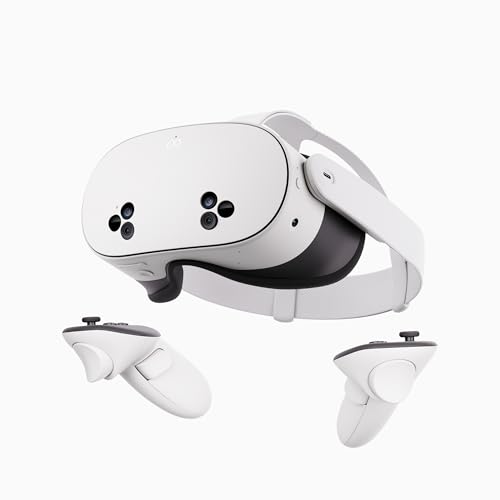
What the Meta Quest 3 Is Trying to Be
The Quest 3 is designed to be an all-in-one headset that doesn’t need a gaming PC or console. You can put it on, draw your boundary, and start playing within minutes. That ease of use is a big part of why the Quest line has been so popular, and Meta clearly doubled down on that philosophy here.
At the same time, this headset is aiming higher than the Quest 2 ever did. The focus isn’t just VR anymore, but mixed reality, better visuals, and a slimmer, more comfortable design. In practice, it feels like Meta is trying to future-proof the Quest platform without pushing the price into enthusiast-only territory.
Design and Comfort Improvements You’ll Notice Immediately
The first thing I noticed when I put on the Quest 3 was how much slimmer it feels. It still has that familiar white plastic look, but the headset doesn’t jut out from your face nearly as much as the Quest 2. That might sound minor, but it makes a real difference during longer sessions, especially when you’re moving around.
Comfort is better overall, though not perfect. The default head strap is fine for casual use, but if you plan to play for an hour or more at a time, you’ll probably want an upgraded strap. That’s been true of every Quest headset so far, so it’s not a surprise. The weight balance is improved, and pressure on the face feels more evenly distributed than before.
Display Quality and Visual Clarity
This is where the Quest 3 really separates itself from earlier standalone headsets. The resolution bump is noticeable, but the bigger improvement comes from the new pancake lenses. Text is clearer, edges look sharper, and there’s far less of that blurry “sweet spot” problem you had to deal with on older models.
In games, environments feel more solid and detailed. In menus and apps, you can actually read smaller text without squinting or constantly adjusting the headset. If you’ve used the Quest 2 a lot, this alone can make the Quest 3 feel like a major upgrade rather than a small refresh.
Performance and the New Snapdragon XR2 Gen 2 Chip
Under the hood, the Quest 3 is powered by the Snapdragon XR2 Gen 2 processor, and it shows. Apps load faster, games run more smoothly, and developers have more headroom to push visuals. Some Quest 3-enhanced games already look significantly better than their Quest 2 versions, with improved lighting and more detailed environments.
What impressed me most is how consistent the performance feels. Even in fast-paced games or more demanding mixed reality experiences, I didn’t run into stutters or hiccups that break immersion. It still can’t match a powerful gaming PC, but for a standalone headset, the performance is genuinely impressive.
Mixed Reality: Gimmick or Game Changer?
Mixed reality is one of the Quest 3’s biggest selling points, thanks to its full-color passthrough cameras. Instead of seeing a grainy black-and-white version of your room, you get a surprisingly clear color view of your surroundings with virtual objects layered on top.
Right now, mixed reality feels more like a preview of what’s coming than a must-have feature. Some games and apps use it in clever ways, and it’s great for quick interactions without fully blocking out the real world. Over time, I think this will become more important, especially for fitness, productivity, and casual gaming, but it’s not the main reason most people will buy the headset today.
Controllers and Hand Tracking
The new Touch Plus controllers ditch the tracking rings, making them smaller and more comfortable to hold. Tracking has been excellent in my experience, even during fast movements or when my hands drift closer to my body. Battery life on the controllers has also been solid, with weeks of casual use before needing a swap.
Hand tracking has improved too, and it’s more reliable than it used to be. I still prefer controllers for most games, but for navigating menus or trying simple apps, hand tracking is actually practical now instead of feeling like a tech demo.
Battery Life and Charging Realities
Battery life is one area where expectations need to be realistic. You’re looking at around two to two and a half hours on a full charge, depending on what you’re doing. That’s pretty standard for standalone VR, but it’s still something to keep in mind.
The good news is that the Quest 3 charges fairly quickly, and external battery packs or upgraded head straps can extend playtime significantly. If you’re someone who likes long VR sessions, budgeting for an accessory upgrade makes sense.
Software, Games, and the Quest Ecosystem
The Quest Store has one of the strongest VR libraries available, especially for standalone headsets. From big-name titles like Beat Saber and Resident Evil 4 VR to fitness apps and social experiences, there’s no shortage of things to do.
One underrated benefit is how well the Quest 3 works with PC VR through Quest Link or Air Link. If you have a capable gaming PC, you can access higher-end VR experiences wirelessly, which adds a lot of long-term value to the headset.
Who the Meta Quest 3 Is For
The Quest 3 is an excellent choice for first-time VR users who want something powerful without dealing with wires or complicated setups. It’s also a worthwhile upgrade for Quest 2 owners who care about visual clarity and performance.
If you already own a high-end PC VR headset and mostly play seated simulation games, the Quest 3 may not replace your current setup. But for everyone else, it hits a sweet spot between price, performance, and convenience that’s hard to ignore.
Final Verdict: Is It the Best VR Under $500?
After spending real time with the Meta Quest 3, I can confidently say it sets a new standard for standalone VR in this price range. The improved visuals, smoother performance, and mixed reality capabilities make it feel like a meaningful step forward, not just an incremental update.
It’s not flawless, and you may want to invest in a better strap or battery solution, but those are manageable trade-offs. For under $500, the Quest 3 offers one of the most complete and polished VR experiences you can buy today.