

Real-world testing reviews are user-generated evaluations that document how a product actually performs under everyday conditions, not inside a controlled lab. They represent the most honest signal a consumer can access before spending money on tech. The role of real-world testing reviews has grown significantly in 2026, as buyers increasingly distrust polished spec sheets and brief professional hands-on sessions. Consumer Reports, verified purchase programs, and user-generated content platforms have all expanded their focus on authentic, long-term usage data because that is what moves purchasing decisions. If you are trying to make a smarter tech investment, this is where the real answers live.
How do real-world testing reviews differ from lab tests and professional reviews?
Lab testing proves that a product functions. Real-world testing proves whether it survives. That distinction matters far more than most buyers realize. Lab environments miss the uncontrolled stresses that define actual use: humidity fluctuations, vibration, unstable power delivery, and the cumulative wear of daily handling. A laptop that passes thermal benchmarks in a climate-controlled room may throttle badly in a warm apartment or a college backpack.
Professional reviews fill a different gap. They apply standardized measures across comparable products and give you a reliable shortlist. But most professional reviews wrap up within days of receiving a unit. Professional reviews focus on broad applicability with standardized measures, while real-world testing shows device performance in unpredictable, personal scenarios. That is a meaningful limitation when you are buying a device you plan to use for three years.

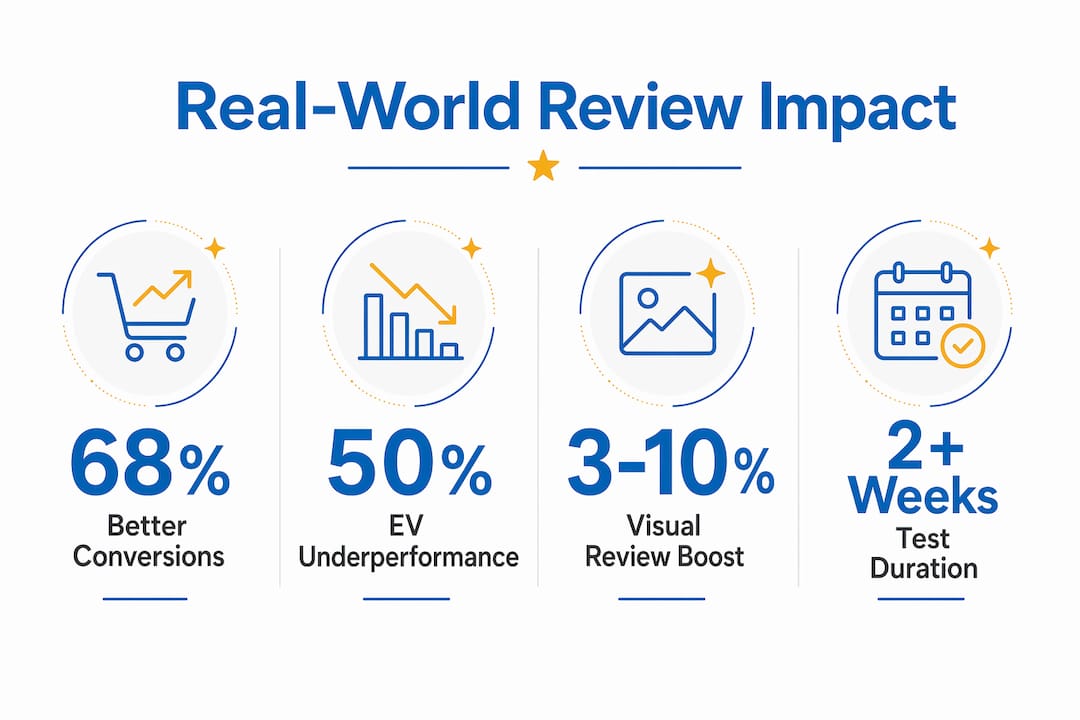
The EV market offers the clearest illustration of this gap. 50% of 26 EVs tested by Consumer Reports underperformed their EPA range estimates at highway speeds. EPA certification happens in a lab. Real-world driving does not. The same principle applies to laptop battery life, gaming handheld thermals, and SSD sustained write speeds under load.
Pro Tip: When reading a professional review, note the test duration. If the reviewer spent fewer than two weeks with the device, treat durability and thermal claims as preliminary, not final.
Real-world reviews also capture environmental variables that no lab protocol anticipates. A user in Phoenix will stress a laptop’s cooling system differently than a user in Seattle. Those regional, behavioral, and contextual differences only show up in aggregate user feedback, not in a single reviewer’s controlled session.
What benefits do real-world testing reviews bring to purchasing decisions?
The benefits of product testing reviews go well beyond simple social proof. They deliver four distinct advantages that professional reviews and spec sheets cannot replicate.
- Long-term durability data. Durability issues like hinge wear or thermal throttling often only emerge through extended real-world use. A product that earns strong short-term scores can develop serious problems at the six-month mark. User reviews posted over time create a longitudinal record that no single professional review can match.
- Personal use case validation. A professional reviewer tests a laptop for general productivity. You might need it for video editing on battery power during a commute. Real-world reviews from users with your specific workflow tell you whether the product actually fits your life.
- Conversion confidence backed by data. Products with 11 to 30 reviews convert 68% better than products with no reviews. For high-ticket items, that conversion lift can reach 380%. Those numbers reflect genuine buyer confidence, not marketing influence.
- Visual proof through media-rich content. Photo reviews lift conversion by 3 to 7%, and video reviews add another 5 to 10%. When a user posts a video showing a laptop fan noise level or a portable SSD surviving a drop, that evidence carries more weight than any written specification.
The cumulative effect is significant. Review sections contain rich longitudinal data and unexpected use cases that function as free research and development intelligence. Manufacturers use this data to improve products. Smart consumers use it to avoid buying the wrong one.
What methodologies are used to collect and evaluate real-world testing reviews?
Collecting reviews is straightforward. Collecting reliable reviews requires a structured approach. The real-world testing evaluation process that platforms and independent sites use involves several overlapping methods.
Verified purchase badges are the baseline. They confirm that the reviewer actually bought and used the product, which filters out a significant portion of manufactured sentiment. Verified reviews add a 15% conversion lift over unverified ones, which tells you something about how much buyers trust that signal.
Media-rich review collection raises the bar further. Platforms that actively prompt users to submit photos and videos alongside written feedback generate more trustworthy content. A written claim that a product “runs hot” is subjective. A thermal camera photo attached to that claim is not.
Thematic analysis is how serious researchers and review aggregators turn raw feedback into usable intelligence. This means categorizing reviews by topic: battery life, build quality, software stability, customer support. When 200 reviewers independently mention the same hinge creak, that pattern is a structural finding, not an outlier complaint.
Negative review handling is often overlooked, but it matters. Systematic collection and analysis of reviews, including professional responses to negative feedback, improves trust and shapes both product development and marketing. A brand that responds thoughtfully to a one-star review signals accountability. That response is itself a data point for prospective buyers.
| Method | What it filters or reveals |
|---|---|
| Verified purchase badge | Confirms actual ownership, reduces fake reviews |
| Photo and video submission | Provides objective visual evidence of performance |
| Thematic categorization | Surfaces recurring issues across large review sets |
| Negative review analysis | Identifies structural weaknesses and brand accountability |
Pro Tip: When evaluating a product’s review section, sort by “most critical” first. Patterns in negative reviews reveal design weaknesses far faster than reading through five-star praise.
How can consumers use real-world testing reviews to make smarter tech purchases?
The most effective approach combines professional reviews for shortlisting and real-world reviews for final validation. The best consumer strategy uses professional reviews to narrow options and real-world feedback to confirm personal suitability. Here is how to apply that in practice.
- Match reviews to your use case. Search for reviews that mention your specific scenario. If you need a laptop for gaming in a dorm room, look for reviews from students or users in similar environments, not general office productivity assessments.
- Check volume and recency together. A product with 400 reviews from three years ago tells you less than one with 80 reviews from the past six months. Both volume and recency matter. Recency catches manufacturing changes and firmware updates that alter real-world behavior.
- Treat perfect ratings with skepticism. A product with a 4.9-star average from 12 reviews has not been stress-tested by a representative sample. Look for products with enough review volume that the rating has been challenged and held up.
- Use photo and video reviews as your primary verification tool. Smart consumers prioritize reviews with photos and videos to gain objective proof of product fit and function in ordinary settings. A user-submitted video of a gaming handheld running a demanding title tells you more about thermal performance than any benchmark chart.
- Read the narrative, not just the score. A three-star review that explains exactly why the reviewer is disappointed gives you more usable information than ten five-star reviews that say “great product.” Detailed narratives reveal the specific trade-offs you will actually live with.
Pro Tip: Cross-reference reviews across at least two platforms. A product that scores well on the retailer’s own site but draws consistent complaints on Reddit or independent forums is showing you something the curated review section is hiding.
What are the limitations of relying on real-world testing reviews?
Real-world reviews are powerful, but they are not immune to distortion. Understanding the failure modes makes you a sharper reader of the data.
- Fake and AI-generated reviews. This is the most direct threat to review integrity in 2026. Automated review generation has become sophisticated enough that text-only fake reviews are difficult to detect without platform-level moderation. Verified purchase badges and media requirements reduce but do not eliminate this risk.
- User bias and subjective variation. A reviewer who expected a budget laptop to perform like a premium one will leave a harsher review than the product deserves. Conversely, a first-time buyer with low expectations may rate a mediocre product highly. Individual narratives reflect individual expectations, not objective performance.
- Sample size limitations. Actual durability issues typically appear only after months in the field, which means a newly released product with 20 reviews has not yet accumulated the failure data that matters most. Early reviews skew positive because early adopters tend to be enthusiasts.
- Lack of diversity in reviewers. If most reviewers share a similar demographic or use case, the aggregate data will not reflect how the product performs for everyone. A laptop praised for quiet operation by home office users may be completely inadequate for a user who runs rendering software for hours at a time.
- Aggregate scores masking important detail. A 4.2-star average can hide a bimodal distribution where half the buyers love the product and half hate it. Always look at the rating distribution chart, not just the headline score.
Key takeaways
Real-world testing reviews deliver the durability, use-case, and long-term performance data that lab tests and short-term professional reviews structurally cannot provide, making them the most reliable final filter before a tech purchase.
| Point | Details |
|---|---|
| Lab tests vs. real-world reviews | Lab tests confirm specs; real-world reviews reveal survivability under actual conditions. |
| Review volume drives confidence | Products with 11 to 30 reviews convert 68% better than those with none. |
| Media-rich reviews carry more weight | Photo and video reviews provide objective visual evidence that text alone cannot match. |
| Hybrid research strategy works best | Use professional reviews to shortlist, then validate with real-world user feedback. |
| Critical evaluation prevents manipulation | Check recency, volume, rating distribution, and verified status before trusting any review set. |
Why I think most people are using reviews wrong
I’ve spent a lot of time reading through review sections on everything from portable SSDs to gaming handhelds, and the pattern I keep seeing is that most buyers read the top three reviews and stop there. That approach misses almost everything useful. The signal is in the middle pages, in the three-star reviews from six months after launch, in the one user who mentions that the hinge started creaking after daily travel. Those details are not dramatic, but they are the ones that will affect your experience.
I think the real value of real-world testing reviews is not in confirming that a product is good. It is in revealing the specific ways a product is imperfect, and then deciding whether those imperfections matter to you. I’ve changed my mind on products I was ready to buy after reading a cluster of reviews from users who shared my exact workflow. I’ve also bought products with mediocre average scores because the negative reviews described problems I would never encounter.
The ASUS ROG Xbox Ally review process at Techreviewnerds is a good example of this. Extended hands-on time revealed thermal behavior and fan noise patterns that a two-day professional review would have missed entirely. That kind of depth only comes from sustained real-world use, and it is exactly what you should be looking for when you read reviews before a purchase.
The uncomfortable truth is that no single review, professional or user-generated, gives you the full picture. The combination does.
— K
Find your next tech purchase backed by real testing
At Techreviewnerds, every recommendation starts with hands-on time, not a press release. The team tests laptops and everyday tech in real conditions, then layers in verified user feedback to surface the trade-offs that matter most. If you are ready to apply what you have learned about real-world review evaluation to an actual purchase, the best laptops for 2026 guide pulls together professional testing and user insights into one practical shortlist. For students specifically, the best laptops for college page narrows the field by real-world priorities like battery life, portability, and build durability under daily use.
FAQ
What is the role of real-world testing reviews?
Real-world testing reviews document how products perform under actual everyday conditions, revealing durability, usability, and long-term reliability that lab tests and short-term professional reviews cannot capture. They are the most practical filter available before a tech purchase.
How do real-world reviews influence buying decisions?
Products with 11 to 30 verified reviews convert 68% better than those with none, and high-ticket items can see conversion lifts up to 380%. Authentic user feedback builds the confidence that spec sheets and marketing cannot.
Are photo and video reviews more trustworthy than text reviews?
Photo reviews lift conversion rates by 3 to 7% and video reviews by 5 to 10%, reflecting how much buyers value visual evidence. Media-rich reviews provide objective proof of real-world performance that written descriptions alone cannot verify.
How can I spot fake reviews?
Look for verified purchase badges, check for media attachments like photos or videos, and read for specific detail. Fake reviews tend to be vague and uniformly positive. Cross-referencing across multiple platforms also exposes inconsistencies that a single site’s moderation may miss.
When should I trust a real-world review over a professional one?
Trust real-world reviews for long-term durability, use-case fit, and environmental performance. Trust professional reviews for standardized comparisons and technical accuracy. The strongest purchasing decision combines both, using professional reviews to shortlist and real-world feedback to confirm.