

Laptop resale value is defined as the price a buyer is willing to pay for a used laptop after accounting for depreciation, condition, specifications, and current market demand. Understanding how laptop resale value works is the difference between leaving $200 on the table and walking away with a fair return. The core factors are brand, age, CPU generation, RAM, storage type, battery health, and the selling channel you choose. Each one pulls the final number in a different direction, and knowing which levers matter most gives you a real edge whether you’re buying with resale in mind or preparing to sell right now.
How laptop resale value works: brand and model tiers
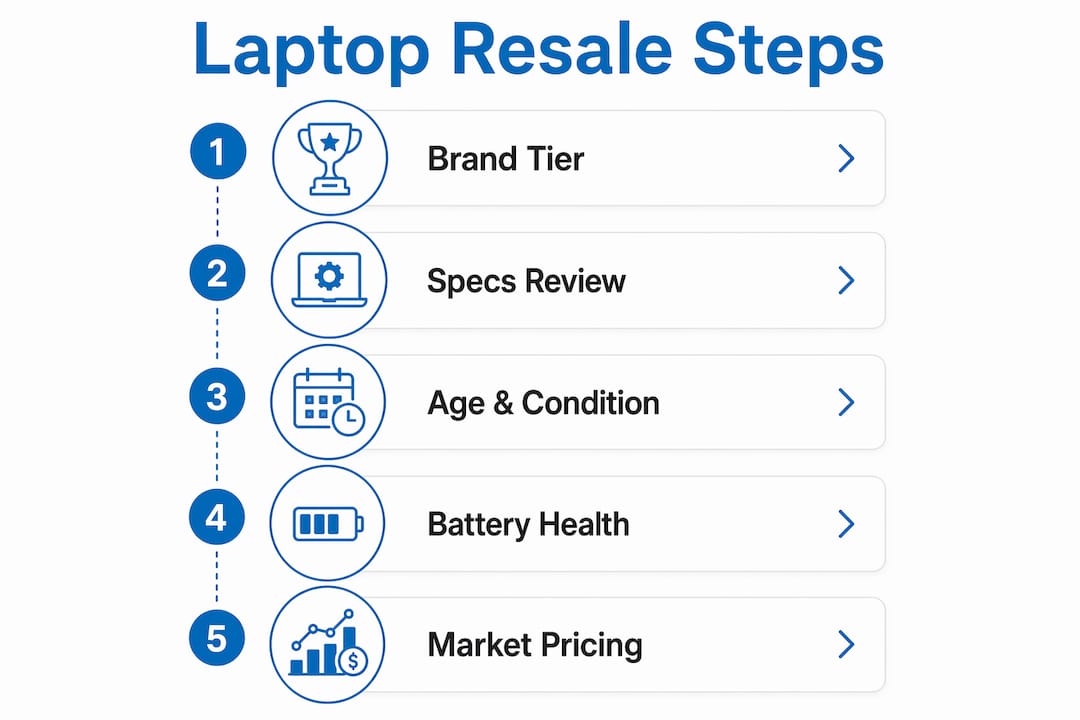
Brand is the single strongest predictor of resale price, and the gap between tiers is wider than most people expect. Premium brands like Apple, Lenovo’s ThinkPad line, Dell’s XPS series, and Microsoft’s Surface Laptop hold value in a way that budget consumer laptops simply do not. Premium ultrabooks drop 25 to 35% in year one, then lose roughly 10 to 15% each subsequent year. That’s a dramatically slower depreciation curve than mid-range laptops, which can shed 40 to 50% of their value in the first twelve months alone.
The reason Apple MacBook Pro and MacBook Air models retain 40 to 60% of their value after two to three years comes down to a combination of brand loyalty, build quality, and the macOS ecosystem. Buyers know what they’re getting. The same logic applies to the ThinkPad X1 Carbon and the Dell XPS 13, both of which carry strong reputations in the business and professional communities. You can read a detailed breakdown of how the Dell XPS 13 holds up in real-world use, which gives useful context for understanding its resale position.

Gaming laptops sit in an interesting middle ground. They depreciate faster than premium ultrabooks but slower than budget consumer models, largely because GPU generation drives buyer interest. An NVIDIA RTX 4060 in a gaming laptop commands a meaningful premium over an older RTX 3060, even if the chassis is identical. When a new GPU generation launches, the previous tier drops noticeably in resale price. That timing factor matters more for gaming laptops than for any other category.
The table below gives a practical snapshot of how resale value compares across segments after two to three years of typical use.
| Laptop segment | Example models | Approximate value retained (2-3 years) |
|---|---|---|
| Premium ultrabooks | MacBook Pro, ThinkPad X1 Carbon, Dell XPS 13 | 45 to 60% |
| Business mid-range | Surface Laptop, HP EliteBook | 35 to 45% |
| Gaming laptops | ASUS ROG, Razer Blade, MSI Stealth | 30 to 40% |
| Consumer mid-range | HP Pavilion, Acer Aspire, Lenovo IdeaPad | 20 to 30% |
| Budget entry-level | Chromebooks, sub-$400 Windows laptops | 10 to 20% |
Pro Tip: If you’re buying a laptop with resale in mind, prioritize the ThinkPad X1 Carbon or MacBook Air over a consumer mid-range model at the same price point. The resale difference after two years often covers the price gap entirely.
What specs actually move the resale price needle
Technical specifications are the second biggest driver of resale value, and buyers scrutinize them closely. 16GB of RAM is the premium sweet spot for resale; 8GB is considered standard and prices accordingly, while 4GB actively lowers buyer interest in most markets. This reflects real-world usage patterns. Buyers shopping for a used laptop in 2026 know that 4GB struggles with modern browsers and multitasking, so they discount it heavily.
CPU generation matters just as much as CPU tier. An Apple M3 chip commands a significant premium over an M1, even in otherwise identical configurations. On the Windows side, Intel Core i7 and i9 processors from the 13th and 14th generation hold value better than equivalent chips from two or three generations back. AMD Ryzen 7 and Ryzen 9 processors have built strong resale credibility over the past few years, particularly in laptops from Lenovo and ASUS. Buyers recognize these chips and price them accordingly.
Storage type and size also shape what buyers will pay. SSDs command higher prices than HDDs across every laptop category, and larger SSD capacities add meaningful value. A 512GB NVMe SSD is the current baseline for premium resale; a 1TB drive adds a noticeable premium. If a laptop still ships with a spinning hard drive, expect a significant discount regardless of other specs.
Accessories are an underrated part of the equation. Including the original charger and accessories can add $30 to $80 to the resale price. That’s not a trivial amount, and it also signals to buyers that the laptop was well cared for. Original boxes, styluses for Surface devices, and dongles all contribute to buyer confidence.
Here’s a quick reference for how individual spec factors affect resale value:
- CPU generation: Current or one generation back holds strong value; two or more generations back reduces price by 15 to 25%
- RAM: 16GB or more is a premium; 8GB is neutral; 4GB actively discounts the listing
- Storage: 512GB SSD is baseline; 1TB adds value; HDDs reduce price significantly
- Display: OLED or high-refresh-rate panels add value; 1080p IPS is neutral; TN panels reduce it
- Original charger included: Adds $30 to $80 to buyer willingness to pay
- Battery health: Below 80% capacity triggers a 10 to 20% price reduction
Pro Tip: On a Mac, check battery health under System Settings > Battery > Battery Health. On Windows, run “powercfg /batteryreport” in Command Prompt to get a full cycle count and capacity report. Know these numbers before you list, because buyers will ask.
How age, condition, and battery health drive depreciation
Laptops lose 25 to 30% of their value in the first year and 50 to 60% by year three. The steepest drop happens in the first twelve months, which is why selling before the one-year mark almost always yields a meaningfully better return than waiting. After year three, depreciation slows, but the absolute dollar value remaining is low enough that the difference between selling at year three versus year four is often minor.
Condition is where sellers most frequently underestimate or overestimate their position. Minor scratches reduce value by 5 to 15%, while cracks, dents, or a damaged screen can cut 30% or more from the price. A cracked screen on a MacBook Pro is not just a cosmetic issue. It signals potential structural damage and tells buyers they’ll need to factor in repair costs, which they will subtract from their offer.
Battery health below 80% capacity typically reduces resale price by 10 to 20%. Battery replacement cost and the inconvenience of limited runtime are real concerns for buyers, and they price that risk in. A laptop with 95% battery health and minor scratches will consistently outperform a pristine-looking machine with 70% battery health.
Here’s a practical grading framework sellers can use to self-assess before listing:
- Like New: No visible wear, original accessories included, battery above 90% capacity. Expect 85 to 95% of current market price.
- Excellent: Light surface marks only, all accessories present, battery above 85%. Expect 70 to 85% of market price.
- Good: Visible scratches, minor scuffs, charger included, battery between 80 and 85%. Expect 55 to 70% of market price.
- Fair: Noticeable wear, possible missing accessories, battery between 70 and 80%. Expect 40 to 55% of market price.
- Poor: Dents, cracks, or significant damage, battery below 70%. Expect below 40% of market price.
A clean laptop sells for 5 to 10% more than an equivalent dirty one. Cleaning the keyboard, screen, and chassis with appropriate materials takes twenty minutes and costs almost nothing. For minor surface scratches on aluminum bodies, a small amount of metal polish can reduce their visibility. These small steps genuinely move the needle on buyer perception and final offers.
Pro Tip: Disclose all cosmetic flaws upfront in your listing. Buyers who discover undisclosed damage after purchase leave negative feedback and request refunds. Honest listings also attract buyers who are already comfortable with the condition, which means smoother transactions and fewer lowball negotiations.
How to price your laptop using real market data
The most accurate way to assess laptop worth is to look at what similar laptops have actually sold for, not what sellers are asking. Sold listings are the most reliable pricing data available, and eBay’s completed listings filter is the most accessible source for this. Filter by your exact model, matching RAM and storage configuration, and the same condition grade. Aggregate three to five recent sales to get a realistic price range.
Condition-grade mismatches in comparable pricing cause 25 to 40% valuation differences, which is why filtering carefully matters. A “Good” condition listing and an “Acceptable” condition listing for the same MacBook Air can differ by $150 or more. If you compare your laptop to the wrong tier, you’ll either underprice it or set expectations you can’t meet. Tools like DealFlip AI’s resale calculators can help you cross-reference sold data quickly without manually sorting through dozens of listings.
Selling channel is the other major pricing variable, and the right choice depends on your priorities.
| Selling channel | Typical return | Speed | Effort required |
|---|---|---|---|
| eBay or Facebook Marketplace | Highest (80 to 95% of market) | 1 to 3 weeks | High (photos, listing, shipping) |
| Trade-in programs (Apple, Best Buy) | Moderate (50 to 70% of market) | Same day | Very low |
| Instant buyback services | Moderate (55 to 75% of market) | 1 to 5 days | Low |
| Local sale (Craigslist, OfferUp) | Variable (70 to 90% of market) | Days to weeks | Medium |
Online marketplace listings yield higher prices but require one to three weeks of active selling time. Trade-ins are faster but pay significantly less. The right channel depends on how much your time is worth and how urgently you need the cash.
Timing also matters. Selling before a new model launch is one of the most effective laptop resale tips available. Apple typically announces new MacBook generations in the fall, and prices for previous-generation models drop noticeably within days of an announcement. Selling two to four weeks before an expected launch preserves more of your value than waiting until after the news cycle hits.
Before listing anywhere, wipe your data properly. Simple formatting is not sufficient for SSDs. Cryptographic erase or physical destruction meets the NIST standards for secure data sanitization on solid-state drives. On a Mac, Erase All Content and Settings handles this automatically. On Windows, use the built-in Reset This PC option with the “Remove everything” setting, which triggers the appropriate erase process on NVMe drives.
My honest read on laptop resale after years of tracking this market
I’ve watched a lot of sellers make the same mistake: they anchor on what they paid, not on what the market will bear. A $1,500 laptop from three years ago is not worth $1,000 today just because it felt premium at purchase. Resale price reflects current buyer willingness to pay, shaped by depreciation timing and what else is available in the market right now. That’s a mindset shift that takes some adjustment, but it’s the only frame that leads to realistic pricing.
The sellers who get the best outcomes are the ones who prepare. They clean the machine, include the charger, check the battery health before listing, and write honest condition descriptions with clear photos. That combination builds buyer confidence before any negotiation starts, and confident buyers don’t lowball as aggressively.
I’d also push back on the idea of upgrading RAM or storage to boost resale value. In most cases, the cost of the upgrade doesn’t translate dollar-for-dollar into a higher sale price. Buyers value the spec, but they don’t pay a premium equal to what the upgrade cost you. The exception is when an upgrade moves a laptop from a clearly undesirable tier (4GB RAM) to a competitive one (8GB), which can meaningfully change the buyer pool. Otherwise, your money is better spent on cleaning and presentation.
One thing I think sellers consistently underestimate is the cost of waiting. Quarterly depreciation is real. A laptop that sells for $600 today may realistically fetch $520 in three months if a new model launches or inventory increases. Speed of sale versus maximum price is a genuine trade-off, and for most people, the convenience of a faster sale at a slightly lower price is the smarter call.
— K
Find your next laptop before you sell your current one
If you’re thinking about selling your current laptop and upgrading, it pays to know which models hold their value before you buy. Techreviewnerds covers the laptops that matter most for everyday users, students, and professionals, with hands-on reviews that cut through the marketing noise.

The best laptops for work, school, and everyday use in 2026 covers the models that balance performance, build quality, and long-term value retention. If you’re a student weighing options, the best laptops for college students in 2026 highlights lightweight, fast machines that hold up well through years of use and resell cleanly when you’re done. Every review on Techreviewnerds is based on real use, with no paid placements shaping the recommendations.
Key takeaways
Laptop resale value is determined by brand tier, age, specifications, condition, battery health, and selling channel, and sellers who address all six factors consistently recover more of their investment.
| Point | Details |
|---|---|
| Brand tier drives the floor | Premium brands like Apple and ThinkPad retain 45 to 60% of value after three years; budget models retain 10 to 20%. |
| Specs set the ceiling | 16GB RAM, a current-gen CPU, and an SSD are the three specs buyers pay a premium for. |
| Battery health is a deal factor | Below 80% capacity reduces resale price by 10 to 20% and increases buyer hesitation. |
| Sell before new launches | Listing two to four weeks before a new model announcement preserves significantly more value. |
| Channel choice trades price for speed | eBay yields the highest return; trade-ins and buybacks offer speed at a 20 to 40% price discount. |
FAQ
How much does a laptop lose in value each year?
Laptops typically lose 25 to 30% of their value in the first year and 50 to 60% by year three. Premium brands like Apple and Lenovo ThinkPad depreciate more slowly than consumer mid-range models.
What is the best time to sell a laptop?
The best time to sell is before a new model launch in the same product line, ideally two to four weeks ahead of an expected announcement. Selling within the first year also yields significantly better returns than waiting until year two or three.
Does battery health affect laptop trade-in value?
Battery health below 80% capacity reduces resale price by 10 to 20% across most selling channels. Trade-in programs and buyback services often re-grade laptops based on battery condition, which can lower the final payout from the initial quote.
Where should I sell my old laptop for the most money?
eBay and Facebook Marketplace yield the highest returns, typically 80 to 95% of current market value, but require one to three weeks of active selling effort. Trade-in programs offer convenience at a 30 to 50% lower payout.
How do I wipe my laptop data safely before selling?
Simple formatting is not sufficient for SSDs. Use the built-in Erase All Content and Settings on macOS or Reset This PC on Windows, both of which trigger a cryptographic erase that meets NIST data sanitization standards for solid-state drives.
Recommended
- Best Laptops for College Students in 2026 (Lightweight, Fast, and Affordable) – Tech Review Nerds
- Dell XPS 13 (9315) Review: Premium Ultrabook Worth the Price in 2026? – Tech Review Nerds
- Best Laptops for Work School and Everyday Use (2026)
- Gaming Laptop vs Desktop Which Should You Buy – Tech Review Nerds