
Portable SSDs have become one of those tools you don’t think much about until you really need one. Maybe your laptop storage is always full, maybe you’re editing large video files, or maybe you just want a fast, reliable way to back things up without trusting the cloud. I’ve gone through more external drives than I’d like to admit, from cheap plastic enclosures to premium models that promised the world and delivered… sort of.
The Samsung T7 Shield 2TB Portable SSD sits firmly in the “premium” category. It costs more than a basic portable SSD, and Samsung leans hard into two promises: speed and durability. The big question is whether those claims actually matter in real use, and whether they justify the higher price. I’ve used the T7 Shield alongside other portable SSDs for everyday backups, photo libraries, and large project files, and this review is based on that kind of hands-on, not-in-a-lab experience.
A rugged, high-speed portable SSD with up to 1050MB/s transfer speeds, IP65 water and dust resistance, and durable design built for travel, creators, and gaming.
What Makes the Samsung T7 Shield Different
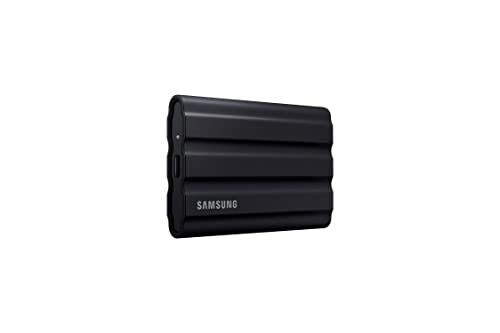
At a glance, the T7 Shield doesn’t look flashy. That’s intentional. Samsung designed it to be tough first and pretty second. The exterior is wrapped in a rubberized shell that immediately feels more secure than the smooth metal finish on the regular T7 or T7 Touch. When you pick it up, there’s grip, and that alone makes it feel more drop-resistant.
Samsung rates the T7 Shield for drops up to about three meters and gives it an IP65 rating. In practical terms, that means it can handle dust and light water exposure without panic-inducing consequences. I wouldn’t submerge it or leave it out in the rain all day, but it’s the kind of drive you don’t worry about using outdoors, in a workshop, or tossing into a backpack with cables and chargers.
The size is still very portable. It’s slightly thicker than the standard T7, but not enough to matter in a pocket or laptop sleeve. If you’re used to carrying any portable SSD, this one won’t feel bulky.
Real-World Speed, Not Just Specs
Samsung advertises read speeds up to 1,050 MB/s and write speeds up to 1,000 MB/s. Those numbers sound impressive, but they only mean something if they hold up outside of benchmarks.
In everyday use, the T7 Shield feels consistently fast. Copying large folders of photos or video files doesn’t come with the weird slowdowns you sometimes see on cheaper drives once the cache fills up. I’ve transferred multi-gigabyte files back and forth without watching the progress bar suddenly crawl to a stop halfway through.
One thing that matters here is sustained performance. The T7 Shield is designed to manage heat better than slimmer SSDs, and that shows. Even during longer transfers, it stays warm but not hot, and speeds stay steady. For tasks like video editing directly off the drive or working with large Lightroom catalogs, that consistency matters more than peak numbers.
That said, to get the full speed, you need a USB 3.2 Gen 2 port. Plug it into an older USB port, and it’ll still work fine, just not at its maximum potential. That’s true of any fast external SSD, but it’s worth keeping in mind if you’re using older hardware.
Build Quality and Durability in Daily Use
Durability is where the T7 Shield really earns its name. I’ve dropped mine once onto a hard floor by accident. Not on purpose testing, just real life clumsiness. It didn’t even disconnect, and there were no performance issues afterward. That’s not something I can say about every portable drive I’ve owned.
The rubber exterior also helps in small ways you don’t think about until you notice them. It doesn’t slide off desks easily. It’s easier to grab with one hand. It doesn’t pick up scratches the way aluminum drives do, so it still looks decent after months of use.
If you’re someone who travels often, works on location, or uses external storage in less-than-ideal environments, this extra toughness isn’t marketing fluff. It actually reduces stress. You stop treating the drive like a fragile object and start treating it like a tool.
Security and Software Experience
Samsung includes optional hardware encryption with the T7 Shield, managed through Samsung’s software. Setup is straightforward on both Windows and macOS. You install the app, set a password, and the drive locks itself when disconnected.
I’ve used this feature when carrying sensitive client files, and it works as expected. Unlocking the drive is quick, and there’s no noticeable slowdown once it’s active. If you don’t need encryption, you can skip it entirely and use the drive like any other external SSD.
The software itself is minimal, which I appreciate. It doesn’t try to do too much, and it doesn’t nag you after setup. Firmware updates are also handled through the same app, which is useful but not something you’ll need often.
How It Compares to Other Portable SSDs
Compared to the regular Samsung T7, the Shield version trades a bit of sleekness for peace of mind. Performance is similar on paper, but the Shield handles sustained workloads and physical abuse better. If your drive mostly lives on a desk and rarely moves, the standard T7 can make more sense.
Against cheaper portable SSDs, the difference is more obvious. Budget models often advertise high speeds but fall short during longer transfers or heat up quickly. Build quality also tends to be the weak point. Plastic enclosures and minimal protection are fine until they’re not.
The T7 Shield sits in that middle ground where it’s clearly more expensive, but also clearly more reliable. You’re paying for consistency, durability, and a brand track record that’s hard to ignore.
Who the Samsung T7 Shield Is Actually For
This isn’t the drive I’d recommend to someone who just wants a cheap way to move a few files occasionally. If that’s your use case, you won’t get much value from the Shield’s extra features.
Where it shines is for people who rely on external storage regularly. Content creators, photographers, videographers, and developers are obvious candidates. So are students or professionals who carry important data around every day and don’t want to baby their hardware.
I also think it’s a great option for console gamers who want fast, reliable external storage that won’t choke under large game installs. The durability helps here too, especially if the drive gets moved between setups.
Downsides You Should Know About
No product is perfect, and the T7 Shield does have a few drawbacks. The biggest one is price. You’re paying more than you would for many other 2TB portable SSDs with similar advertised speeds. If durability doesn’t matter to you, that premium can feel unnecessary.
The rubber exterior, while practical, does attract dust and lint more than smooth metal. It’s a small thing, but you’ll notice it if you care about how your gear looks.
Finally, there’s no biometric security like the T7 Touch offers. That won’t matter to most people, but if fingerprint unlocking is something you value, it’s worth noting.
Long-Term Reliability and Peace of Mind
One of the hardest things to judge in a review is long-term reliability. You don’t really know how a drive holds up until you’ve used it for months or years. That said, Samsung has a strong track record with SSDs, and the T7 Shield feels built for the long haul.
In my experience, it’s the kind of drive you forget about, and that’s a good thing. It just works, transfer after transfer, without random disconnects or performance drops. When you’re dealing with important data, boring reliability is exactly what you want.
Final Verdict: Is the Samsung T7 Shield 2TB Worth It?
The Samsung T7 Shield 2TB Portable SSD isn’t the cheapest option, and it’s not trying to be. What you’re paying for is a combination of fast, consistent performance and a level of physical protection that most portable SSDs simply don’t offer.
If your external drive lives a calm, desk-bound life, you can save money with a simpler model. But if you move your drive around, work with large files, or just want something you don’t have to worry about, the T7 Shield earns its price. It’s not flashy, it’s not overhyped, and it doesn’t try to be clever. It’s just a solid, dependable piece of storage that does what it promises, even when conditions aren’t perfect.