
When it comes to keeping your lawn looking pristine, robot lawn mowers have taken center stage in recent years. They save time and effort, allowing you to enjoy your yard without the hassle of traditional mowing. Two popular models that often come up in discussions are the ECOVACS Goat O1000 RTK and the O1000 LiDAR Pro. Both of these mowers boast impressive features, but how do they stack up against each other? I’ve spent some time looking into their specs, performance, and user experiences to help you decide which one might be the best fit for your needs.

|
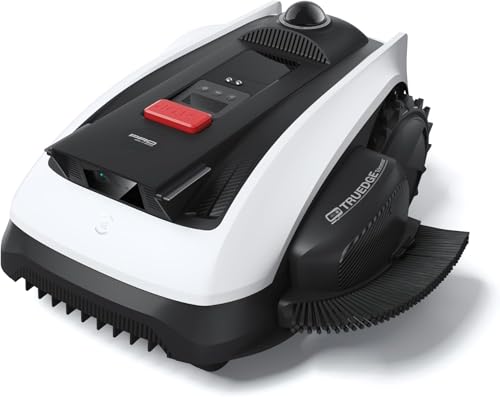
|
|
$999.99
|
$1,469.99
|
Overview of the ECOVACS Goat O1000 RTK
The ECOVACS Goat O1000 RTK is designed for larger lawns, accommodating areas up to 1 acre. One of the standout features of this model is its Real-Time Kinematic (RTK) positioning system. This technology allows the mower to navigate with precision, ensuring that it covers every inch of your yard without missing spots or overlapping.
In my experience, the RTK system makes a noticeable difference in efficiency. Traditional GPS-based mowers can sometimes struggle with accuracy, especially in irregularly shaped lawns, but the Goat O1000 RTK seems to handle this with ease. Plus, it can be controlled via a mobile app, giving you the flexibility to manage your mowing schedule from anywhere.
Overview of the ECOVACS Goat O1000 LiDAR Pro
On the other hand, the ECOVACS Goat O1000 LiDAR Pro also caters to larger lawns but relies on LiDAR technology for mapping and navigation. This model uses laser scanning to create a detailed map of your yard, which helps it understand where to mow and where to avoid obstacles.
What I find particularly impressive about the LiDAR Pro is its ability to adapt to changing environments. If you have garden decor or new plants that spring up in your yard, the LiDAR technology helps the mower quickly learn and adjust its path accordingly. It also features a robust app for scheduling, which makes it convenient for anyone who values tech-savvy solutions.
Comparing Performance
When it comes to performance, both models shine in their own ways. The Goat O1000 RTK offers superior accuracy and efficiency due to its RTK positioning. I’ve noticed that it can complete mowing tasks in less time because it doesn’t require multiple passes in the same area.
Conversely, the O1000 LiDAR Pro excels in obstacle detection and avoidance. The LiDAR technology creates a 360-degree view of the mower’s surroundings, allowing it to navigate around trees, flower beds, and other obstacles without any hiccups. If your lawn has a lot of features or unique layouts, this model might be the better choice.
Another aspect to consider is battery life and charging time. Both mowers are designed to handle extended mowing sessions, but the O1000 LiDAR Pro tends to recharge faster. On weekends when I’m busy with family activities, I appreciate how quickly I can get the mower back out on the lawn.
User Experience and Features
User experience can often make or break a product, and both models offer a range of features that enhance usability. The Goat O1000 RTK is praised for its user-friendly app interface, which allows for easy scheduling and monitoring. I found it refreshing to adjust the mower’s settings without stepping outside.
On the flip side, the LiDAR Pro also has a highly rated app, but users often highlight its advanced mapping capabilities. Being able to see a real-time map of where the mower has been and where it’s going adds a layer of transparency that many users appreciate.
Both models come with safety features, such as lift and tilt sensors, which prevent accidents. However, if you have pets or small children, the O1000 LiDAR Pro may provide a bit more peace of mind with its advanced obstacle detection system.
Pros and Cons
To help you weigh the options, let’s break down some pros and cons of each model.
ECOVACS Goat O1000 RTK
Pros:
- Exceptional accuracy with RTK positioning.
- Efficient mowing with minimal overlap.
- Easy app navigation for scheduling and monitoring.
Cons:
- May struggle with sudden changes in landscaping.
- Slightly higher learning curve for initial setup.
ECOVACS Goat O1000 LiDAR Pro
Pros:
- Advanced obstacle detection and mapping.
- Fast charging time for quick turnaround.
- Adapts well to changes in the yard.
Cons:
- May not be as efficient in terms of mowing time compared to RTK.
- Slightly higher price point due to advanced technology.
Final Recommendation
Both the ECOVACS Goat O1000 RTK and the O1000 LiDAR Pro have their unique strengths and cater to different types of users. If you have a larger, more open lawn and want precision mowing, I would lean toward the Goat O1000 RTK. However, if your yard is filled with obstacles or if you frequently change your landscaping, the LiDAR Pro might be the smarter choice for you.
|
|
|
|
$999.99
|
$1,469.99
|
Frequently Asked Questions
Which model is better for complex landscapes?
The ECOVACS Goat O1000 LiDAR Pro is typically better for complex landscapes, as its LiDAR technology allows it to navigate around obstacles more effectively.
How long does it take to charge both models?
The O1000 LiDAR Pro generally has a faster charging time compared to the Goat O1000 RTK, making it more convenient for quick turnaround.
Can I control these mowers via a smartphone app?
Yes, both models come with a user-friendly app that allows you to schedule mowing, monitor progress, and adjust settings from your smartphone.
Are these robot mowers safe around pets and children?
Both models feature lift and tilt sensors for safety, but the O1000 LiDAR Pro offers enhanced obstacle detection, making it a safer choice in homes with pets or small children.
How do I maintain these mowers?
Regular maintenance includes cleaning the blades, checking for any obstructions, and ensuring that the charging stations are clear. It’s also a good idea to update the software via the app periodically for the best performance.